
November/December 2026 | Issue VII
We’re adapting each edition for easier online reading, so you may notice a few differences from the printed magazine.
Use the table of contents to jump between stories, enlarge graphics for a closer look, visit the highlighted nonprofits, and click advertiser links to learn more.


Want to be part of a future edition?
We’re always looking for Veterans, family members, and community voices to hear from. Share your perspective, tell us about someone we should know, or let us know if you’d be open to an interview.
TABLE OF CONTENTS
WE ASKED, YOU ANSWERED


OVERWATCH

You don't have to be in crisis to reach out.
Overwatch is a peer-to-peer network of Veterans who have volunteered to accept a call, text or email from a fellow Veteran or service member who may be feeling alone, overwhelmed, disconnected, or just needs to talk with someone who understands.
VETERANS SHOWING UP FOR VETERANS
Our Overwatch volunteers have families, jobs, and lives of their own, but they've chosen to make room for fellow Veterans who need connection. We're grateful for every person who answers the call to support fellow Veterans through connection and conversation.
AVAILABLE BY PHONE
Tony DeHaven | Navy
Cell | 434-221-8191 (Call or Text)
Rick Gallaher | Army
Email | rickgallaher@gmail.com
Cell | 434-616-6838 (Call or Text)
Melinda Larson | Navy
Email | mlarson@trailtorecovery.org
Cell | 757-641-9383 (Call or Text)
TJ (Troy) Shaw | Army
Cell | 540-817-3809 (Call or Text)
Sarah Bonner | Air Force
Email | sjbonner14@gmail.com
Cell | 434-851-0745 (Call or Text)
Andrew Becker | Army
Cell | 270-348-2596 (Call or Text)
Ethan Maltby | Marines
Cell | 804-625-2622 (Call or Text)
Nick Hubbard | Marines
Cell | 434-907-4861 (Call or Text)
Davina Bare | Army
Cell | 803-467-6271 (Call or Text)
AVAILABLE BY TEXT OR EMAIL
Ken Vignali | Army
Email | kenneth.vignali@live.com
Heather Rawls | Army
Email | heatherrawls@gmail.com
Cell | 434-378-5724 (Text)
Jay Brooks | Air Force
Email | jaybrooks962@gmail.com
Cell | 434-477-6667 (Text)
Stephen Koski | Army
Email | stephen.koski@gmail.com
Cell | 321-266-8663 (Text)
Kenneth Smith | Army
Email | kgsdls@aol.com
Tom Current | Army
Email | tomcurrentlaw@verizon.net
Debra Stump | Navy
Cell | 434-944-5804 (Text)
Mark Luther | Army
Cell | 210-355-9496 (Text)

THEN & NOW

A DIFFERENT WAY TO SERVE | An interview with US Air Force Veteran, James Tomlin

James Tomlin loved Anchorage, Alaska, calling it the most gorgeous place he had ever been. But when his time in the Air Force ended, he chose to return to his hometown of Lynchburg, where most of his family lived. “The majority of my family is here, and we're all very family-oriented.” He says.
Coming home meant leaving a career he had intended to keep. James loved the Air Force, but an accident left him unable to deploy and led to a medical discharge after a couple of years. As an F-15 Crew Chief, he had learned what it meant to have someone else’s life depend on his work.
“Every time somebody pulls off of that flight line, that's a life,” he said. The responsibility stayed with him. “When you get used to something, you get comfortable. If you get comfortable, you get sloppy.

The transition after service was difficult;
James didn’t know what help was available to him at the time. About a year after his discharge, a DAV representative at the Salem VA asked whether he had filed a disability claim; James hadn’t known that he could. Thankfully, the representative helped him through the process.
Years later, at his Uncle’s funeral, a Navy Veteran, members of American Legion Post 16 performed military honors. “And I felt like that was a really good closure for my Aunt. And that meant a lot to me that somebody in the community came out there to do that.”
So, when a Veteran at his daughter’s school later invited him to the Legion, James remembered those honors. He joined the post’s Uniformed Services Group to offer other families that same comfort and respect. “It was my way to continue to serve,” he said.
His involvement continued to grow through conversations with fellow members. A discussion about Halloween decorations became ideas for a community trunk-or-treat event and a haunted maze; both ways to introduce younger Veterans and their families to the post, and to show them that they are much more than a social club.
When other members encouraged James to run for Commander, he saw an opportunity to build on that mission, taking the Legion’s programs into the local community so people could see everything it offers. Supporting families, partnering with organizations and welcoming younger Veterans means respecting traditions, while also creating new ideas and trying new things.
For those still serving, James’s advice is to learn about available support before leaving the military, lean on fellow Veterans and the community, and pass that knowledge along to others.
“You have to be your own advocate.” James wants to leave Post 16 stronger than he found it. As he puts it: “It's about service. It's about taking care of the people around you. And it's about leaving something better for the people who come after you.”
THE 12-YEAR-OLD BOY WHO WENT TO WAR | Remembering Calvin Graham

Calvin Graham was only 12 years old when he enlisted in the U.S. Navy in August 1942. Claiming to be 17, the young boy from Texas reportedly wore his older brother’s clothes, practiced speaking in a deeper voice and even started shaving in hopes of looking older. He made it through the recruiting process, completed training in San Diego and was assigned to the battleship USS South Dakota.
By October, Graham was serving as part of a gun crew in the Pacific. Less than three months after enlisting, on Nov 14/15, 1942, he was aboard the South Dakota during the Naval Battle of Guadalcanal, where the ship came under intense Japanese fire. Shell fragments struck Graham in the face, damaging his jaw and knocking out teeth, but he continued helping wounded Sailors around him.
“I took belts off the dead and made tourniquets for the living,” he later recalled.
For his actions, Graham received the Bronze Star Medal with Combat “V” and the Purple Heart. But soon after, the Navy discovered his true age. Because he had been too young to legally enlist, his enlistment was declared void, his military status disappeared and his medals were taken away. He was sent home without the pay and benefits normally associated with his service.
The exact details surrounding how his age was discovered are not completely clear. The version most often repeated says Graham’s mother contacted the Navy after learning what he had done, while later government records indicate she acknowledged knowingly signing paperwork that listed a false birth year. What is clear, is that Graham returned home at 13 after already serving in combat and being wounded in one of the Pacific war’s major naval battles.
He spent decades trying to have his service fully recognized. In 1978, the Navy finally issued Graham a retroactive honorable discharge and restored most of his decorations. Ten years later, President Ronald Reagan signed special legislation recognizing Graham’s dental injuries as service-connected and authorized reimbursement & back pay, which totaled $4,916.99.
Graham’s Purple Heart, however, was still missing when he died in 1992 at age 62. It was not restored until 1994, when Secretary of the Navy John Dalton presented it to Graham’s widow, Mary.
“I just wished that he had gotten this when he was alive,” she said.
Graham lived long enough to see his story reach television. In 1988, CBS aired ‘Too Young the Hero’, starring Ricky Schroder as Graham.

BEHIND THE WHEEL WITH TOMMY ROBERSON
V²M | The Veteran Magazine is proud to be an associate sponsor of Lynchburg resident Tommy Roberson, driver of the #82 Chase Dixon Motorsports Chevy Camaro, as he heads into his second full season of racing in 2027!
Tommy races in the Super Street division at Lonesome Pine Raceway, finishing his first full season in the Top 5 in points, with ten Top 10 finishes.
Before racing, Tommy served in the U.S. Army with the 82nd Airborne Division, including combat service in Iraq. His post-military path included a 16-year career in radio before eventually putting himself behind the wheel of the #82.
Throughout the 2027 season, we'll be following Tommy and the #82, sharing updates from the track and giving you a chance to follow along. Tommy will be featured in the January 2027 edition of V²M sharing more about his military service, his years in radio, how racing entered the picture, and the road that brought him to where he is today.


CONTINUING THE MISSION | An interview with Navy Veteran & Award-Winning Country Music Artist Brooks Herring

Years later, the uniforms were no longer his dad’s. Brooks entered boot camp at 18. He served six years on active duty, deploying to Iraq and Africa, before later spending two years in Afghanistan working for the Army as a weapons specialist.
But his departure from the Navy in 2011 became one of the hardest periods of his life. After losing a close friend in 2006, Brooks volunteered for orders to Iraq carrying anger and a desire for vengeance; frustrations with his career, depression and heavy drinking followed. A DUI ultimately ended his Navy career sooner than expected.
“I had no purpose anymore. I had no mission anymore,” he said. That year, Brooks attempted to take his own life.
Not long afterward, while searching Craigslist for a bartending job, he found an

opening for a crane operator in Afghanistan. He knew nothing about cranes, but sent his credentials anyway. The response was an offer to return to Afghanistan as a weapons specialist.
“I feel like that kind of saved my life,” he said. “For the time being, it gave me another purpose. I felt like I was back in the fight.”
When he returned home in 2013, Brooks opened a restaurant with his dad, but still struggled to find what came next. At his brother’s urging, he eventually went to the VA to ask about education benefits. That decision opened a new, and unexpected, path.
Brooks enrolled at the University of South Carolina, earning a Bachelor of Science in Exercise Science and later a Doctor of Physical Therapy degree in 2021. His goal was to work with Veterans recovering from combat trauma and help them regain as much function as possible.
“I was always at my worst when I didn't have a mission, when I didn't have a purpose and I didn't have direction,” he said.
Music, however, had followed Brooks through nearly every chapter of his life. He began playing trumpet in sixth grade, drums in seventh and guitar at 14. He wrote songs and carried a guitar on every deployment.
In 2020, while still in physical therapy school, Brooks visited Nashville through a Veterans music program and was introduced to co-writing, writers’ rounds, recording studios and the Nashville music community.

“That was the turning point,” he said. “That was when I knew this is where I need to be and this is what I need to do.”
He finished his doctorate and began laying the groundwork for a music career. In 2022, he released his first song, “Why Me?,” which he had originally written in Afghanistan for two men that he had lost. By January 2023, Brooks had packed a U-Haul and moved to Nashville to study music at Belmont University and pursue it full time. But another change was still coming.
Alcohol had been part of Brooks’ life through the military, college and Nashville, where drinking easily became part of life as a working musician. After Christmas 2024, he decided he was finished with it.
“That was the last time I had a drink, was Christmas of 2024. I haven't had a single drink since.”
Sobriety also changed the way Brooks looked back at his life. He became more willing to take responsibility for his own decisions and to see some of the failures and closed doors in his past differently.

Today, service remains at the center of what he does.
“Every time I do something that I feel like serves someone else, there is a return,” he said. “And it's not anything monetary. It's not anything physical. It just lifts a weight off of my heart.”
Brooks uses music to help Veterans and Gold Star families tell their stories, sitting down with them to create original songs from their experiences, memories and loss. He also serves with his American Legion honor guard.
He believes that desire to serve began with his family, was strengthened by the military and has continued to take different forms throughout his life.
It’s also the advice he gives Veterans preparing to transition out of the military: have a mission, know where you want to go and continue finding ways to serve.

“You can stretch yourself so thin to become wealthy or to become rich or become famous or whatever else, and when all that stuff goes away, there's nothing left,” he said. “If you stretch yourself thin serving others, when you fall, there will be 100 arms there to catch you.”
For Brooks, the mission may have changed many times, but the heart behind it has remained remarkably consistent:
“Continue the mission, continue to serve.”
LISTEN NOW
Brooks’ first released song, ‘Why Me?’, was originally written in Afghanistan for two men he lost.
A SAILOR'S TRANSITION | By R. DeHaven

Somebody asked me a while back what the hardest part of transitioning out was, after 15 years on a medical discharge.
I told them it wasn’t the paperwork. It wasn’t the job search. It was losing the structure that told me who I was every single day for over a decade and a half.
In uniform you always know your lane. Your rank, your role, your mission. Your calendar was full before you even opened it, meetings, work assignments, ceremonies, people needing decisions from you. Then one day it’s gone and you’re standing in your kitchen at 9am on a Tuesday with an empty calendar, wondering why it feels so strange to have nowhere to be.
Nobody warns you that the hardest enemy after service is a slow morning.
Here’s what I’ve picked up along the way, some of it the easy way, 90% of it the hard way.
1. Your rank doesn’t transfer, nobody in the civilian world cares what you used to be. They care what you can do today. The discipline, the ability to take a beating and show up anyway, that’s the actual asset. Lead with that, not your resume.
2. Structure isn’t given anymore, you have to build your own. I still get up early and move my now older body every day, not because it’s on a schedule someone else built, but because I know what happens to me when I stop.
3. Find your new formation. I didn’t realize how much I missed having people who just got it. Turns out a lot of leaders were sitting in their own quiet kitchens too, wondering where their formation went.
4. You will feel behind. You are not behind. I didn’t start my own non-profit thinking I had it figured out. I just did it and said I guess I'm doing this again tomorrow until I do figure it out.
I’m not going to pretend I’ve got this all cracked. Some days I still feel like I’m faking it until I see another Veteran brother or sister visit the shop and I see the look on their face working on something they love. But I’ve learned I have a new mission. It’s being stubborn enough to build the mission myself, one unglamorous day at a time.
If you’re a Veteran reading this and the quiet is getting loud, you didn’t lose your training. You just haven’t picked your next mission yet.
What’s one good habit from your service days that’s still carrying you? Use that and lock in on your own next mission.

FROM A SINGLE STAR TO A COUNTY'S LEGACY | (PT 2) By Mark Hutson

In our last edition, Mark shared how an unexpected find at an auction introduced him to the Blue Star Service Flag tradition and sparked a growing collection dedicated to preserving the stories behind the stars. Now, his story continues with the collection’s first public display, and an unexpected gift from a Marine who survived Iwo Jima.
The First Display and the Gift I Never Expected
Our first large Service Flag event took place at American Legion Post 457 in Mequon, Wisconsin. I had spent months preparing the exhibit—building custom stands for the larger flags, framing the smaller flags, posters, and sheet music, and arranging display cases filled with what seemed like an endless number of Service Flag artifacts. Yet as the moment approached for me to speak, I found myself unexpectedly apprehensive. It had been many years since my time as a drill instructor at the Home of the Infantry at Fort Benning, Georgia. Standing before a room full of strangers felt very different from standing in front of a platoon. This time, I wasn’t barking commands, I was undertaking something of equal importance. I was preserving history, giving voice to the stories, sacrifices, and truths entrusted to us. In that moment, the responsibility felt as profound as any I had carried before.
Just before making my way to the podium, an elderly gentleman began walking toward me. His bright red U.S.M.C. baseball cap silently signaled a proud Marine Corp Veteran. “Once a Marine, always a Marine,” he would later confide in me. As he drew closer, affixed just above the brim, was a brass pin with the name of the deadliest single battle in the history of the Marine Corp: Iwo Jima. I had read and watched documentaries about it, but now I was standing at arm’s length with a

man who had lived through it.
Ralph told me he had read an article in the local newspaper about our Service Flag event. As we began talking, I noticed he was carrying a small brown paper bag tucked under his arm. He said he had brought something for me—if I wanted it—and added that I should feel no pressure to accept it. I wondered what it could be Ralph unfolded the bag and gently pulled out a Service Flag with a single blue star. His voice softened as he explained that his mother had hung this flag in their home while he was serving in World War II. It was a simple object, yet it carried the weight of a family’s hope, fear, and pride. To be entrusted with it was a gift beyond anything I expected that day.
Ralph’s story was extraordinary. He was a 60mm mortarman in Company D, 2nd Battalion, 27th Marine Regiment, 5th Marine Division. At 9:04 am, his Company rolled up on Red Beach 1 in the first wave of attacks on Iwo Jima. During the month of brutal fighting, his unit suffered staggering casualties. After thirty-three consecutive days of intense fighting, Ralph emerged as a survivor. Standing beside him, holding the flag his mother once displayed, I felt the full gravity of what the Service Flag tradition represents.
After the event, Ralph and I met several times, most often for breakfast at the local George Webb’s Restaurant. Our conversations wandered across many parts of his life. He spoke with quiet affection about his late wife, whose passing had left him navigating a world suddenly far too empty. He also shared memories of the terrifying days he spent fighting on Iwo Jima. Ralph was never dramatic in the telling; he simply spoke the truth of what he had lived through, offering his experiences with the same steady humility that had carried him through the war itself.

I learned that Ralph’s extraordinary story didn’t end on the last days of March, in 1945, when the guns fell silent. His would continue 50 years later when he returned to the small, 8-square-mile volcanic island, this time not carrying a mortar tube, but a piece of personal history he felt compelled to return to the rightful owners: a Japanese flag he had taken from a dead Japanese soldier during the battle. He told me that the flag no longer had a place in his home in Germantown, Wisconsin. In a photograph he later gifted to me, Mrs. Kuribayashi, the widow of General Tadamichi Kuribayashi, who commanded the Japanese forces on the island, is shown accepting the flag. It is a moment of humanity rising out of the ashes of one of the fiercest battles in American history.
Our first Service Flag event was far more than a display or an opportunity to educate the public about a long-standing American tradition. It was an encounter with living history. It marked the beginning of building a library of stories to be retold time and again, reminding future generations of the sacrifices made on our country’s behalf. As we packed up the flags that evening, I found myself wondering what stories, what people, and what moments might be waiting at the next event.
Though our first display had been close to home, a long journey to the mountains of northeast Georgia lay ahead, and with it, another Gold Star story waiting to be discovered.
There’s more to Mark’s story; join us for Part Three in the next edition of V²M.


THE SERVICE SHE CARRIES FORWARD | A bakery owner's lifelong commitment to service, by Megan Williams
At 17 years old, Ashley Beesley enlisted in the U.S. Navy, with her father’s signature

on the waiver that allowed her to enter service before her 18th birthday. As a Damage Controlman, Beesley trained as a firefighter and learned firsthand the discipline, preparation, and composure required when the stakes are high.
Although her military career ended sooner than she had anticipated with a medical discharge after two years, Beesley did not see her discharge as the end of her commitment to service.
“My military experience taught me that leadership is not simply a title or authority—it is a responsibility to the people entrusted to you,” Beesley said. “Good leaders establish clear expectations, remain steady under pressure, and never ask others to do something they would be unwilling to do themselves.”
Those lessons have influenced Beesley’s work as the Executive Pastry Chef and Owner of Sweet Indulgence Bakery in Lynchburg, Virginia, but her understanding of service extends well beyond her business. Sweet Indulgence Bakery prioritizes employing and empowering women who are rebuilding their lives after domestic violence, sexual assault, and human trafficking.
“The military instilled in me the belief that service is not limited to wearing a uniform,” she said.
Today, Beesley serves on the board of the YWCA of Central Virginia, volunteers through her church, serves as an ambassador for a local Women in Business group, and is a delegate for the Central Virginia Business Coalition. Through each role, she says, she looks for opportunities to mentor others, strengthen her community, and help people create opportunities for themselves. Her connection to the military community has also continued long after her discharge. Beesley enlisted in 2007 and remained connected to military life through her family and relationships. Her father and uncle are Navy Veterans, and her husband, Jonathan, currently serves in the Navy.

“I have never been disconnected from the military community,” she said. “It remains an important part of my family, my perspective, and my identity.”
For Beesley, that connection has also shaped how she supports today’s service members and Veterans. She intentionally supports Veteran-owned businesses and organizations serving Veterans, particularly those advocating for stronger mental health care and support during and after military service.
While her own time in uniform ended faster than anticipated, Beesley sees service as something much larger than a period of enlistment.
“My service looks different today, but the underlying purpose remains the same: to serve others and strengthen the community around me,” she said.
NEW LAWS SUPPORTING VETERANS | SPM Advisors Legislative Affairs Desk
A field guide to the pro-Veteran measures that have cleared Congress and the President's desk in 2026 — no pending bills, no press releases, just enacted statute and signed executive action.
Earlier this year, we covered three new bills affecting Veterans: the Disabled Veterans Housing Support Act, FAST VETS Act and VA Budget Shortfall Accountability Act. All three were signed the same day; the White House confirmed the joint signing of H.R. 224, H.R. 1823, and H.R. 4446 on January 20, 2026.
Everything else you may have read about — a 62-bill omnibus, a new cost-of-living bill — is still moving through Congress and isn't binding yet. Here's what you can rely on today.
The One Executive Order
Important distinction for readers: an executive order is a presidential directive to federal agencies on how to implement existing law — it is not itself a statute, and it can't create new entitlements or override Congress. It's binding on the agencies named in it, not a new right a Veteran can invoke the way they would invoke a public law.
Executive Order 14426 | “Accelerating Access to Veterans’ Benefits and Employment Opportunities”
SIGNED SEPTEMBER 8, 2026
Four concrete directives:
Records sharing: DOD has 30 days to ensure military personnel files, health records, and service treatment records transfer to VA immediately upon discharge — addressing the current 90-to-180-day delay caused by legacy IT systems, according to the White House.
IT contract review: DOD and VA have 120 days to review existing information technology contracts for interoperability.
New digital claims tools: VA and the Department of War are directed to deploy new digital tools, using secure artificial intelligence and other emerging capabilities consistent with applicable privacy protections, to consolidate benefits applications into a single source.
TAP overhaul: The order directs the Secretaries of War, Labor, and Veterans Affairs to overhaul the Transition Assistance Program and proactively connect transitioning service members with a benefits specialist.
What changes for you?
For Veterans, the potential benefit is not necessarily a larger check or a new entitlement — it's the possibility of accessing existing healthcare, disability, education, and employment services with fewer bureaucratic hurdles, and that outcome depends entirely on how VA and DOD execute against these deadlines. If you separate from service in the next 12–18 months, this is the provision most likely to affect your claims timeline directly.

Sources
Congress.gov — H.R. 224, H.R. 1823, H.R. 4446 (119th Congress), bill status and text
The White House, “Congressional Bill H.R. 224, H.R. 1823, H.R. 4446 Signed into Law” (Jan. 20, 2026)
CCK Law, “Three Veterans Bills Signed into Law in 2026” (June 9, 2026)
The White House, Executive Order 14426 and accompanying Fact Sheet (Sept. 8, 2026)
Federal Register, Vol. 91, No. 175 (Sept. 11, 2026) — Executive Order 14426 text
Newsweek, “How Trump Executive Orders Could Impact Veterans Benefits” (Sept. 9, 2026)
PTSD - MY REALITY STORY | By Jennifer Farney, M.A., BSN, RN

I joined the Army for that sense of adventure and camaraderie when I was only 20 years old. My combat medic training led me to San Antonio, Texas. I thrived in the military, loved running, and made new friends but soon realized my Cadre Sergeants were abusing their power and authority and created a life of hell for myself and others.
Sexual harassment was rampant and noticed by several NCO’S who had joined the training for Special Forces. Things were so bad that they filed an IG complaint which led to a large investigation of the entire Charlie Company. I just wanted to get out of there and even passed on an opportunity for additional training to get to my permanent duty station.
When I and other females would arrive to a new duty station the mantra was ‘new meat has arrived’ and I felt disgusted and at times sorry I had joined what I thought was something very special that had core values such as loyalty, duty, respect, honor, and integrity. Instead, I often experienced humiliation, sexual harassment, and fear of retaliation.
I have great memories as well such as serving on the Honor Guard Burial Team as the flag folder, meeting my husband and serving in Germany where our daughter was born. She developed complex medical problems, and I had to return to the US while my husband deployed to Desert Storm.
Eleven years passed when out of nowhere I developed symptoms that made me feel like I was suffocating, my heart and mind were racing, and I experienced auditory triggers. I thought ‘where did all this come from.’ The symptoms kept coming and I kept running from them. I became angry and irritable and finally my husband said, ‘something is wrong.’ I knew something was wrong I just didn’t know what. I swore to never take medication, but I was becoming this monster that I hated. I was ashamed. I saw my PCP and he immediately prescribed Effexor for panic attacks associated with PTSD.
Medication is often necessary to settle the nervous system so one can think, process, and heal. I realized that the military sexual trauma and our daughter’s medical condition created the storm within my nervous system. But, it has taken years for me to learn to develop healthy coping and train my brain to settle when it is triggered.
It is hard but I am not alone and my faith in Jesus has brought me freedom and joy. I still struggle and I have multiple triggers but there is light in the tunnel, and you do not have to navigate this on your own.
Currently, I offer peer support, Veteran advocacy, and care coordination for female Veterans who have PTSD/MST.

I am part of a legislative team going to DC in November 2026 to introduce a potential bill for gold standard accountability, reporting, and tracking system for all military branches relating to sexual trauma. I am also proud of my time serving in the Army and being a spouse of a retired Army Veteran.


ALLIES IN ACTION | Find New Resources Available to Veteran & Military-Connected Families


If you operate a nonprofit serving Veterans and would like to be featured, please email us at:
COMMUNITY ALLY SPOTLIGHT | The 3D CEB Foundation

Founded in 2025, THE 3D CEB FOUNDATION was established with a simple but powerful belief: no Veteran or military family should have to face life after service alone.
The Foundation was born from loss, remembrance, and a determination to ensure that no Veteran feels forgotten. Since 2008, the 3rd Combat Engineer Battalion community has lost 38 Marines due to combat and the battle at home. Those losses serve as a constant reminder that the challenges of military service do not always end when a deployment is over.
Serving Veterans of the 3rd Combat Engineer Battalion, combat Veterans, their families, and Guardian families, the Foundation is built around the belief that connection can save lives. Its mission is to bring Veterans and families together while helping them access the resources and support they need to thrive.
From peer support and employment resources to mental health referrals, emergency assistance, family support, scholarships, retreats, and community events, the Foundation focuses on meeting Veterans and families where they are and helping them find a path forward.
One of its signature programs, Brotherhood Alliance, creates opportunities for male Veterans to build meaningful relationships through trust, conversation, and camaraderie. There is no pressure to share a story or have all the answers. Sometimes simply showing up is enough.
The Foundation also strengthens community through its annual 3rd CEB Reunion and Reunion/Respite events, bringing Veterans and their families together for remembrance, fellowship, healing, and support.
As The 3D CEB Foundation grows, it continues to expand its reach through new programs, partnerships, employment initiatives, and community engagement. Volunteers, sponsors, community partners, and supporters all play an important role in helping ensure that Veterans and families always have somewhere to turn.
Their promise is simple: Not One More
Not one more Veteran lost to isolation.
Not one more family left searching for support.
Not one more Veteran forgotten.
Not one more person believing they must carry the burden alone.
For The 3D CEB Foundation, “Not One More” is more than a slogan. It is a commitment to honor those who have been lost by strengthening the connections that help save lives.


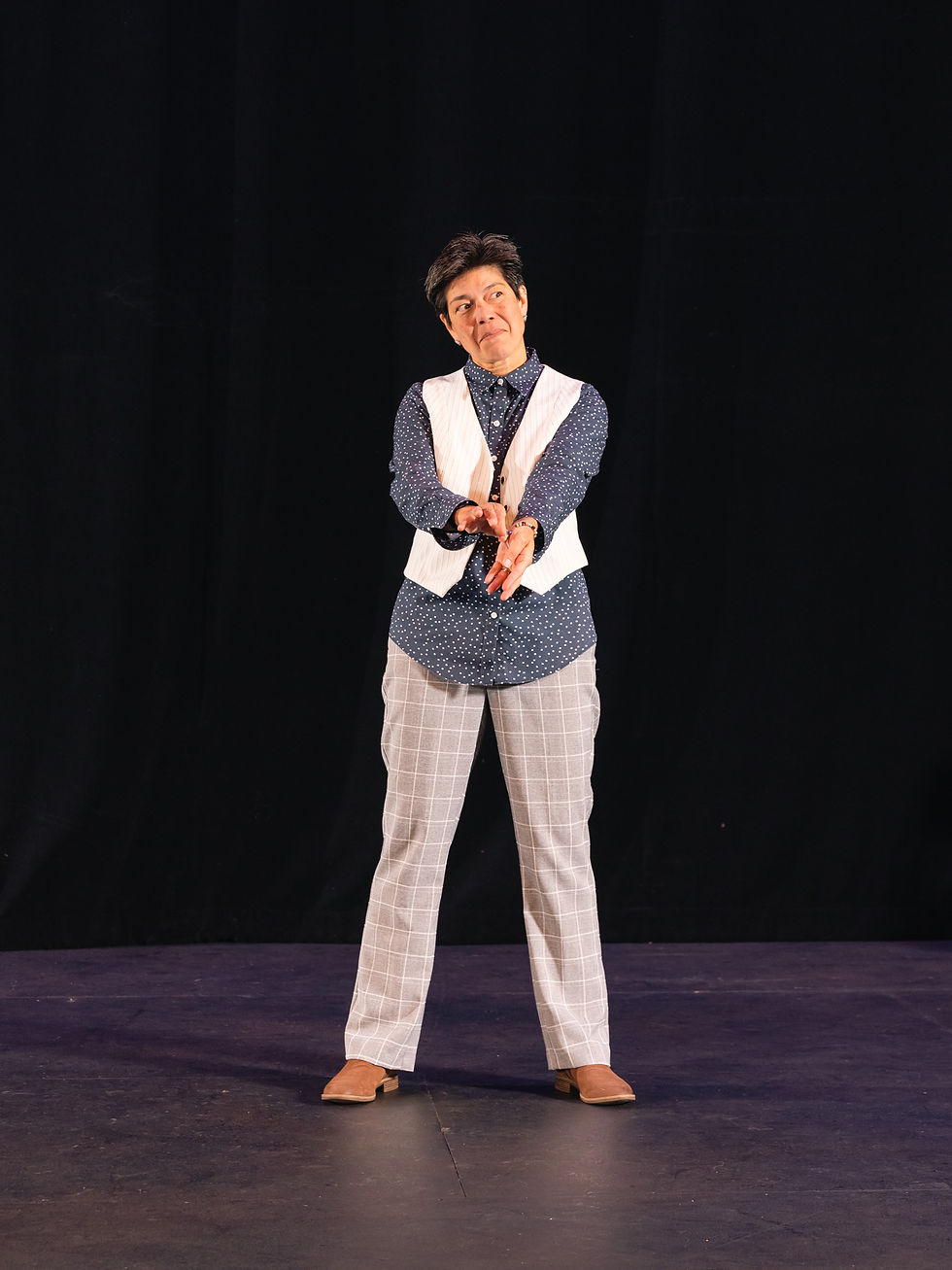
THE UNIFORM SHE NEVER IMAGINED | An interview with Air Force Colonel (Ret) Mo Barrett

After 25 years in the Air Force, retired Colonel Mo Barrett discovered that sometimes the next mission begins by just walking through an open door.
Mo always knew the Air Force would be part of her life; she just didn't know exactly what that would look like.
Her father served in the Army Air Corps during World War II, and her brother joined the Air Force through ROTC. Mo assumed she would follow a similar path through Virginia Tech. Then one day, while cutting class, she ducked into her high school's career center and saw a video about the U.S. Air Force Academy.
She told her guidance counselor she was going to apply.
He laughed and told her she'd never get in. For a kid she described as timid and lacking confidence, the comment could have ended the idea. Instead, it became a challenge.
She didn't get into the Academy the first time, but after attending prep school, she applied again and was accepted. When she came home for Christmas break, she made a point of visiting that guidance counselor in uniform.
That persistence would follow her throughout her career.
Her whole life has been a series of seeing doors, pushing it open, then "...you just bust your ass to make success of walking through that door."
At the Academy, women made up only about 10 percent of Mo's class. And competition for pilot training was fierce; two years before graduation, the number of available pilot slots had been drastically reduced, leaving her class competing for just 225.
Mo earned one.
She went on to fly the C-27, a small twin-engine turboprop, in Panama and later the massive C-5. Eventually, she rose to the rank of Colonel during a 25½-year Air Force career.
During Mo’s 25½ years in the Air Force, the military changed in ways that affected her personally. There were also plenty of labels that could have been used to describe her: woman, Asian American, gay, pilot, officer and eventually Colonel. Some came with challenges of their own: when she entered the military, being gay was prohibited. She served through Don't Ask, Don't Tell and its repeal, and eventually married Jen, who also retired as an Air Force Colonel.
But Mo is also quick to point out the limits of labels.
"None of us are any one label. I'm the last of 6 from a blended family. I'm gay. I'm

married. I have a pet, you know, I'm a dog mom. All these different things, that's just one little glimpse of who we are."
For all she accomplished in uniform, leaving the Air Force was difficult. Mo had hoped to become a General, and leaving the Air Force meant coming to terms with a goal she hadn't reached. But after over two decades of service, there was an even bigger question waiting for her: Who was she without the uniform?
"My whole identity was, I'm an airman, or I'm an officer, or I'm a pilot. I didn't know who I was."
And that answer came through another series of doors.
While still serving, she became intrigued by a tour director she watched while vacationing in Greece. She got certified and eventually found herself leading middle school tours in Washington, D.C., despite initially insisting she wanted nothing to do with kids; and she loved it.
Then someone introduced her to the world of professional speaking. One connection led to a speaking coach, and six days later, she was in California attending an event. There, she met the franchise holder for TEDx Youngstown, who encouraged her to apply.
In September 2019, she stepped onto a TEDx stage for the first time.

Today, Mo is a professional speaker who uses humor and storytelling to talk about leadership, connection, perspective and the lessons she gathered during her career.
Looking back, she sees the cumulative effect of all those small decisions to try something new, meet someone or walk through another door.
"I feel like maybe the uniform fit because that was all I ever imagined. And now, I'm wearing a uniform that I never imagined wearing, and I love it even more."
It's also what she encourages other Veterans to remember as they approach life after service: don't automatically dismiss an opportunity because it doesn't resemble the future you pictured for yourself. Try something new, meet people who aren't like you., and pay attention to what excites you. Trust the instincts you’ve built through years of experience.
And when a door appears, don't be so quick to decide what's waiting on the other side. Take Mo’s advice: “Just open your eyes, and say yes!”
THE SEARCH | Written by Michelle DeHaven, based on firsthand accounts and notes provided to V²M by Stephen Koski

In the last edition, we introduced readers to Stephen Koski and the experiences that shaped ‘The Last Responder’, his forthcoming account of September 11, 2001. This issue, we move forward nearly 25 years, as Stephen returns to New York in search of the people who can help document that he was there.
For twenty-three years, Stephen Koski wanted nothing to do with September 11. He had responded that day as a civilian, making his way to St. Vincent's Hospital and later north of Chambers Street, helping wherever he could. But unlike responders who arrived with an official unit or organization, Stephen had no roster documenting where he'd been, no employer letter, and no chain of command. For more than two decades, that didn't matter to him.
Then, as Stephen puts it, "The dust I carried home in my lungs announced it wasn't done with me." Suddenly, proving where he'd been mattered.
To establish his presence for the September 11th Victim Compensation Fund and World Trade Center Health Program, Stephen says he needs witnesses who can verify that he was there. For responders who deployed as part of a unit, a roster can provide that documentation, but Stephen had self-deployed.
So, nearly twenty-five years later, he found himself in the back seat of a rented Camry headed north on I-95 with two retired law enforcement officers he'd known since he was 17.
They weren't going to New York to revisit old memories; they were going to find witnesses. The three had assembled what Stephen calls a "high-value witness list": seventeen rows of individuals and groups he remembered working alongside. Somewhere among them might be the people who could verify his presence that day.
It was an unusual investigation. The two retired officers handled logistics and leads while Stephen, by his own description, took the back seat both literally and figuratively. The men shared something else, too: each wore a class ring with the word “Duty” molded into its side. Stephen believes that had either of them been with him in Manhattan on September 11, they would have run downtown with him.
Now, decades later, they were showing up again. On Sunday, August 23, 2026, the search brought them to a well-kept home and one of the names on Stephen's list: a senior officer who had led soldiers at Ground Zero.
There was no answer at the door. They spoke with neighbors. They left a message with the doorbell
camera. After nineteen months of calls, messages, and searching, a cold lead had finally become warm.

Stephen went to Staples and printed blank Witness Presence Statements, then they went back to the house.
This time, the door opened.
In the next edition, Stephen's search leads to a difficult question:
What happens when proving your own history requires someone else to relive theirs?


This is USMCVeteran Gary Witt.
I would like to talk with someone about covering an event this weekend! (Sunday Nov. 1st)
It’s the Veteran’s Appreciation Luncheon at Brookville Ruitan Club in Lynchburg, Va!
We are expecting 70-80 Local veterans and their spouses! We’d love to feature an article in your magazine and give some samples of your magazine.
Thanks,
You can Text or call me for more information!
Gary Witt (434) 258-1808